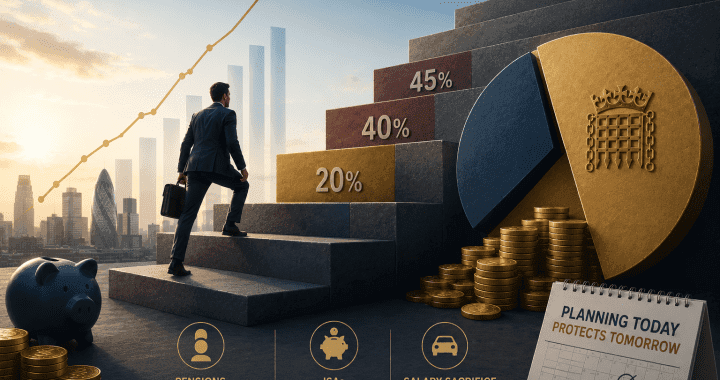
As frozen thresholds and rising rates squeeze earners, understanding 2026’s evolving tax landscape is no longer optional—it’s essential for survival.
Fiscal drag occurs when the government freezes tax thresholds while nominal wages rise with inflation. Current policies have frozen the Personal Allowance at £12,570 and the higher-rate threshold at £50,270 until April 2031.
This “stealth tax” is projected to create both many more new taxpayers and new higher-rate taxpayers by the end of the decade.
For many, a simple inflationary pay rise now may trigger a 40% tax bracket, not because they are wealthier, but because the tax bands have remained static for many years.
Rising Rates on Assets and Savings
Beyond threshold freezes, 2026 brings explicit rate increases designed to align the taxation of investment income with earnings:
Dividend Tax: From 6 April 2026, basic and higher rates will rise by two percentage points to 10.75% and 35.75%, respectively. The additional rate will remain unchanged at 39.35%.
Savings and Property Income: Starting in April 2027, rates across all bands will increase by 2%, pushing the additional rate to 47%.
Capital Gains: Following the October 2024 Budget, rates on shares now sit at 18% for basic-rate and 24% for higher-rate taxpayers.
Strategic Responses
To navigate this tightening environment, financial advisors are emphasizing three core strategies:
Pension Contributions: This remains the most effective tool to lower taxable income, helping individuals avoid the 60% “tax trap” between £100,000 and £125,140 or retain eligibility for Child Benefit.
ISA Maximisation: With taxes on interest and dividends rising, sheltering assets within the
£20,000 annual ISA allowance is critical. Notably, the Cash ISA allowance for under-65s is set to fall to £12,000 in April 2027.
Salary Sacrifice: Exchanging salary for non-cash benefits like pensions or electric vehicles remains highly effective, though a new £2,000 annual cap on National Insurance relief will be introduced in 2029.
The 2026 fiscal landscape marks a definitive shift from “stealth” measures to overt rate hikes. With the Personal Allowance locked until 2031 and investment taxes climbing, the cost of inaction is rising alongside inflation.
To protect your wealth against increase in taxation, your priority may need to move from simple saving to proactive planning—utilising every available allowance before the window
narrows further.
Strategies that were once considered “optional extras” may now be ever more important tools needed to stop the Treasury from becoming the primary beneficiary of your hard-earned pay rise.
The value of pensions and investments and the income they produce can fall as well as rise and you may not get back the full amount that you originally invested.
Levels and bases of, and reliefs from, taxation are subject to change and their value will depend upon personal circumstances. Taxation and pension legislation may change in the future.
The Financial Conduct Authority does not regulate Taxation Advice.