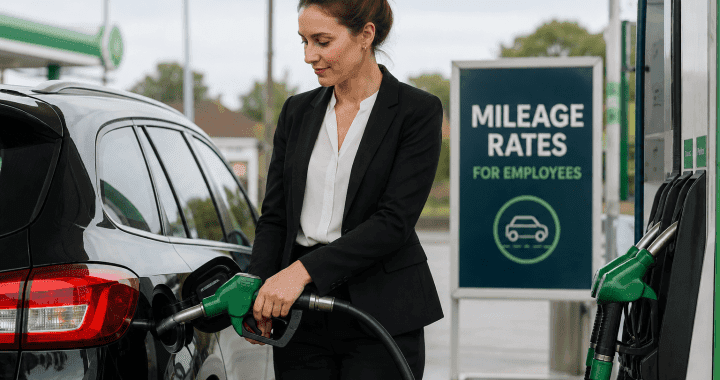
With rising fuel costs and continued pressure on household budgets, mileage allowances remain a key way for employees to recover the cost of using their own vehicles for work. For the 2026/27 tax year, HMRC has introduced an important update, and it could make a real difference to your take-home value.
Mileage rates are set by HMRC. They define the maximum amount employers can pay tax-free when employees use their own vehicle for business travel.
These rates are designed to cover all running costs, including:
- Fuel
- Insurance
- Servicing and maintenance
- Depreciation
From 6 April 2026, the approved rates are:
Cars and Vans
- 55p per mile for the first 10,000 business miles (increased from 45p)
- 25p per mile above 10,000 miles (unchanged)
Motorcycles
- 24p per mile
Bicycles
- 20p per mile
Passenger Payments
- An extra 5p per mile per passenger for work-related car sharing
This is the first uplift in over a decade, reflecting the rising cost of motoring and inflationary pressures.
Eligible journeys include:
Visiting clients
Travelling between different workplaces
Attending external meetings or training
Not eligible:
Commuting to your normal workplace
Personal use
Employers are not required to pay the HMRC mileage rate. However, the HMRC rate represents the maximum tax-free allowance.
If your employer pays less than 55p per mile, there are important implications:
You Can Claim Tax Relief on the Shortfall
If you are underpaid, you may be entitled to claim the difference between:
- What your employer paid, and
- The HMRC approved rate
For example:
- Employer pays 30p per mile
- HMRC rate is 55p per mile
- You can claim relief on the 25p difference per mile
However, it’s crucial to understand: You only claim tax relief, not the full cash difference
So if you’re a basic rate (20%) taxpayer:
- 25p gap × 20% = 5p per mile actual benefit
This means you are still out of pocket overall, but you recover some of the loss through reduced tax.
To support any claim, you should keep:
- Dates of journeys
- Locations (start and end)
- Mileage
- Business purpose
Without records, HMRC may reject claims.
Kate Brown, director at Nicholsons, commented “The 2026 increase to 55p per mile is a welcome update and reflects today’s real-world driving costs, but the impact for employees depends heavily on what their employer actually pays.”