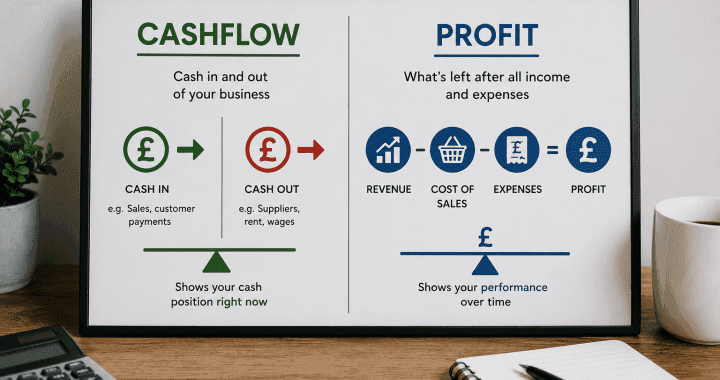
One of the most common misconceptions among business owners is that profit equals financial health. While profit is important, it does not always reflect the reality of your business’s day-to-day financial position. In fact, many profitable businesses fail due to poor cash flow management.
Understanding the difference between cash flow and profit is essential for making informed decisions and ensuring long-term sustainability.
What Is Profit?
Profit is what remains after all expenses are deducted from revenue. It is typically shown on your profit and loss account (P&L) and measured over a specific period.
Types of profit include:
- Gross profit – revenue minus cost of sales,
- Operating profit – after running costs,
- Net profit- after all expenses, including tax and interest
Profit tells you whether your business model works, but it doesn’t show when money actually moves in and out of your bank account
What Is Cash Flow?
Cash flow refers to the movement of money into and out of your business. It determines whether you can meet financial obligations such as:
- Paying suppliers,
- Covering payroll,
- Meeting tax liabilities,
- Servicing debt.
Why Profit Doesn’t Equal Cash
Here are some key reasons why profit and cash flow often differ:
1. Timing differences
You may record a sale today, but if your customer pays in 60 days, the cash hasn’t arrived yet
2. Credit sales
Selling on credit increases profit, but until payment is received, it creates pressure on cash flow
3. Upfront costs
You might need to pay fort stock, wages, or overheads before generating revenue from those expenses
4. Capital expenditure
Large purchases e.g equipment, can impact cash immediately, but are spread over time in a profit calculation
5. Loan repayments
Loan repayments affect cash flow but do not fully appear as an expenses in the profit figure. Only the finance charges will affect profitability
Example:
A business may show £100,000 in sales with £20,000 profit, but if most invoices remain unpaid, it may still face cash shortages.
Why Cash Flow Matters
Cash flow keeps a business operating day-to-day. Without sufficient cash, businesses risk missing payments, delaying wages, and even insolvency.
Growth opportunities could also be missed due to being unable to fund them.
How to Manage Cash Flow Effectively
1. Monitor cash flow regularly
Maintain a rolling cash flow forecast ( at least 3-6 months ahead). Monitor this against actual cash flows
2. Improve credit control
Ensure you invoice promptly upon completi9n of work
Set clear payment terms
Follow up on overdue invoices quickly
3. Manage expenses carefully
Align spending with expected cash inflows where possible
4. Build a cash buffer
Aim to hold reserves to cover at least 2-3 months of operating costs
5. Consider financing options
Short term funding such as overdrafts or invoice finance can help bridge timing gaps
The Bottom Line
Profit is an important measure of success, but cash flow is what sustains your business. It is the lifeblood. Without cash, even a successful business can run into trouble