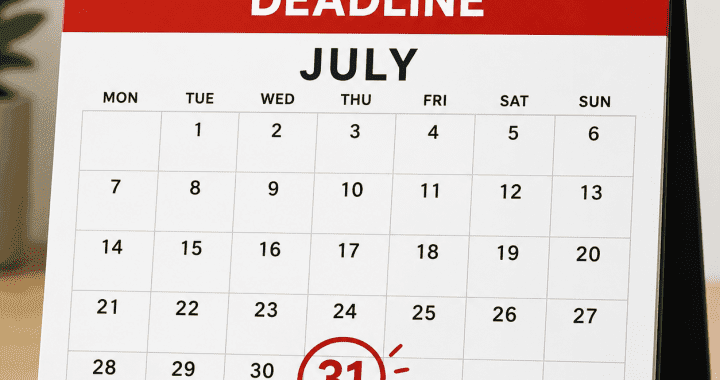
As we approach the end of July, I just want to remind clients about an important Self Assessment deadline that often gets overlooked – the second payment on account.
If you’re self-employed or have income outside PAYE, this is something you’ll likely need to plan for.
What are payments on account?
Payments on account are essentially advance payments towards your next tax bill.
Rather than paying everything in one go, HMRC splits your tax into two instalments. Each payment is usually 50% of your previous year’s tax bill (excluding things like student loan repayments and capital gains tax).
Key dates
There are two key dates to remember:
31 January – first payment on account (plus any balancing payment)
31 July – second payment on account
It’s the July payment that often catches people out, as it comes quite a while after the January deadline.
Who needs to pay?
You’ll usually need to make payments on account if:
Your last tax bill was over £1,000, and
Less than 80% of your tax was collected at source
This typically applies to:
- Self-employed individuals
- Freelancers and contractors
- Landlords
- Anyone with significant untaxed income
How much will it be?
As a general rule, your July payment will be:
50% of your previous year’s tax bill
For example:
If your last tax bill was £4,000, you would have paid £2,000 in January and you’ll need to pay another £2,000 by 31 July.
This is then credited towards your next year’s liability.
What if your income has dropped?
If your income has reduced, you don’t necessarily have to overpay.
It’s possible to reduce your payments on account, but I’d always recommend doing this carefully. If payments are reduced too far and the final bill ends up higher, HMRC will charge interest on the shortfall.
What happens if you miss the deadline?
There’s no immediate fixed penalty for missing the 31 July deadline, but:
- Interest starts to accrue straight away
- The longer it’s left, the more it will cost
So it’s definitely something to deal with sooner rather than later.
A quick reminder
A few simple things I’d suggest:
- Check what you owe in plenty of time
- Make sure funds are set aside
- Don’t ignore the July payment just because January has passed
- Get in touch if you think your income has changed and payments should be reviewed
Final thoughts
Payments on account can feel confusing, especially if you’re new to Self Assessment, but they’re really just HMRC’s way of spreading the cost.
The main thing is to stay ahead of the deadlines and avoid any surprises.
If you’re unsure what you need to pay, or whether your payments on account are still appropriate, just let me know and I’ll be happy to take a look.