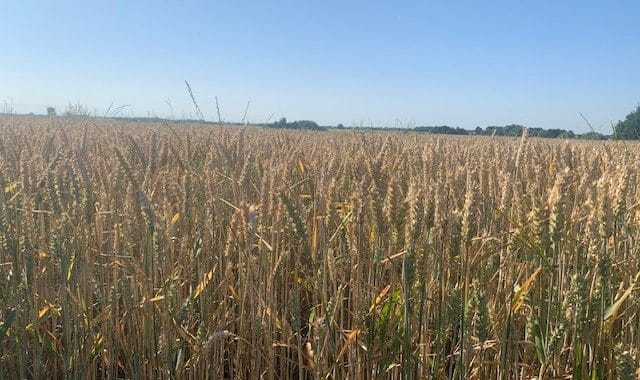
Share farming is moving back up the agenda as UK farm businesses reassess how they are structured in response to succession pressures, tighter margins and ongoing policy changes.
Recent industry commentary suggests a growing interest in the model, particularly among businesses looking for greater flexibility than traditional tenancies or contract farming arrangements can offer. What was once seen as a niche approach is increasingly being revisited as part of a broader shift in how farming businesses are organised.
At its simplest, share farming allows two independent businesses (a landowner and an operator) to farm the same land and share the output. Unlike a tenancy, there is no rent. Unlike a partnership, profits are not pooled. Instead, each party retains their own business identity, pays their own costs and takes a share of the income generated.
A defining feature of the model is that both parties can be treated as actively farming the land. That distinction is important, not just commercially but from a tax perspective, reinforcing the position that each is carrying on a trading business rather than receiving passive income.
A structure aligned with change
One of the key drivers behind renewed interest is succession. Many landowners are looking for a way to step back from the day-to-day running of the farm without triggering a full handover or losing their status as an active farmer.
Share farming provides a middle ground. It allows the next generation, or an external operator, to take on operational responsibility, while the landowner remains involved at a strategic level. In practice, this creates the opportunity for a phased transition rather than a single, high-risk step.
At the same time, the model is opening doors for new entrants. With land values and capital requirements continuing to act as barriers, share farming offers a route into the industry without the need for significant upfront investment. Operators can build a track record, generate profits and reinvest over time, rather than taking on immediate debt or long-term commitments.
There is also a broader commercial rationale. With volatility in both input costs and output prices, fixed arrangements can feel increasingly restrictive. Share farming, by contrast, aligns both parties around performance. When the business does well, both benefit. When conditions are more challenging, the impact is shared.
Importantly, this is not always an “all or nothing” structure. In practice, arrangements can range from whole-farm agreements to more targeted collaborations such as sharing labour, machinery or specific enterprises making the model more flexible and scalable than is often assumed.
The financial reality
That alignment, however, cuts both ways.
Crucially, both parties accept full commercial risk. This is fundamental to distinguishing share farming from more passive arrangements and is central to how the model operates in practice.
For landowners used to a guaranteed rental income, moving into a share farming arrangement represents a clear shift in risk. Income becomes variable and dependent on the success of the business. For operators, the absence of a fixed rent can ease cash flow pressure, but it also means returns are directly exposed to market conditions and operational performance.
This makes upfront financial modelling essential. Understanding how income and costs flow between the parties and how sensitive outcomes are to changes in yield, price or input costs is key to ensuring the arrangement is sustainable for both sides.
Tax and structuring considerations
The growing interest in share farming is not just commercial; it is also being driven by tax planning considerations.
Maintaining trading status is often a central objective for landowners, particularly in the context of inheritance tax reliefs such as Agricultural Property Relief (APR) and Business Property Relief (BPR). A well-structured share farming agreement can support this by demonstrating ongoing trading activity, rather than passive receipt of rent.
However, the detail matters. If the arrangement drifts too close to a tenancy in practice where the landowner has limited involvement and bears little risk there is a risk that HMRC could challenge the availability of reliefs.
Equally, care is needed to avoid unintentionally creating a partnership. While collaboration is fundamental to the model, the legal and financial separation of the two businesses must be clear. Blurring that line can have significant tax and legal implications.
For both parties, clear documentation, robust governance and consistent implementation are critical. This is not simply a case of drafting an agreement at the outset; the day-to-day operation of the arrangement needs to reflect the intended structure.
Execution remains the deciding factor
Despite its advantages, share farming is not a straightforward solution. Its success depends heavily on the relationship between the parties and the clarity of the agreement underpinning it.
More than most structures, share farming requires a collaborative mindset. It is designed to be mutually beneficial rather than adversarial, and success depends on combining complementary strengths; pairing assets, experience and capital with energy, labour and entrepreneurial drive.
In practice, many of the challenges arise not from the concept itself, but from how it is implemented. Misaligned expectations, lack of communication and poorly defined responsibilities can all undermine what is otherwise a strong commercial model.
Regular communication and a shared understanding of objectives are essential. Unlike more traditional arrangements, where roles and returns are fixed, share farming requires ongoing collaboration and transparency.
A model worth revisiting
With an ageing farming population and continued barriers to entry, industry bodies have long argued that alternative structures such as share farming will play an increasing role in bridging the gap between land ownership and farm operation.
For farm businesses facing structural change, it offers a flexible alternative to more traditional routes. It can support succession, enable new entrants and introduce a more performance-driven approach to managing risk and reward.
As with any structure, it will not be right in every case. Its suitability depends on the objectives, risk appetite and working relationship of the parties involved.
Share farming is not just a technical arrangement; it is a strategic tool. When structured and implemented correctly, it can unlock opportunities, improve resilience and support long-term planning. When approached without sufficient clarity, it can create risk in exactly the areas it is intended to address.